
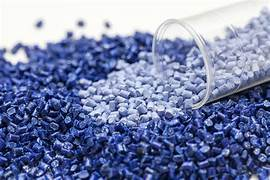
The plastics granules are minor plastic pellets that perform as basic raw material in making various plastic products. Which can get melted and molded into different items like bottles, bags, pipes, toys, etc.
In fact they are easy to process, have a reliable quality, and can be moulded into any form in ways such as injection moulding, blow moulding, film extrusion, pipe extrusion, and roto-moulding due to which they are very popular . Understanding the types and behaviour of plastic granules is important for those associated with manufacturing, product design, or the polymer industry.
- POLYPROPYLENE(PP) PP is a lightweight, strong, and highly adaptable substance known for its excellent resistance to chemicals and its high melting point. The pro’s of these particular type of polymers are ,microwave-safe food containers, caps and closures, automotive components, and medical devices that require heat resistance. It’s balanced stiffness and flexibility, along with full recyclability in most systems at the same time , make it a captivating material choice.
- HIGH DENSITY POLYETHYLENE PLASTIC GRANULE
HDPE is another key plastic granule used across industries. HDPE in particular has a very good strength-to-density ratio and outstanding resistance to various kinds of chemicals. Due to this , HDPE is recurrently used in blow-molded products such as milk bottles, jerry cans, and chemical drums. HDPE pipes, toys, and injection-molded spare parts are also manufactured. Its durability and resistance to impact make the material quintessential product that has to stand rough handling. - LOW DENSITY POLYETHYLENE LDPE is the another most popular material that most people equate with flexible packaging. LDPE granules can be used to manufacture carry bags, stretchable films, sheets, and even squeezy bottles. LDPE is soft, light, and resistant to moisture. It is not as vigorous as HDPE , but its elasticity makes it convenient for producing thin films and applications in basic packaging.
- LINEAR LOW-DENSITY POLYETHYLENE PLASTIC GRANULE
LLDPE has become the most dominant in the film industry. LLDPE is harder and more resistant to punctures than LDPE because of the eccentric arrangement of its molecular structure. This makes it ideal for stretch films, heavy-duty bags, liners, and industrial packaging. Although LDPE offers better clarity and softness, LLDPE however provides higher toughness and durability. Therefore, these two materials are based on end-use. - POLYVINYL CHLORIDE plastic granules plastic granules The other significant category of plastic granules is PVC, or polyvinyl chloride, which are in rigid and flexible forms. Rigid types of PVC is used in the industries of pipe manufacturing,fittings, window profiles, and building materials due to their toughness and very long life expectancy. The flexible PVC is attained with the inclusion of plasticizers and finds application in electric cables, footwear, medical tubes, and blood bags. Because of its excellent weather resistance, electrical insulation, and it can be easily modified for various uses, PVC stands at a pronounced place of value.
- ENGINEERING PLASTICS plastic granules
There is another class of plastics known as engineering plastics beyond the other commodity plastics . For instance include ABS, Nylon (PA), Polycarbonate (PC), Acetal (POM), PBT, and high-performance polymers such as PEEK. Engineering plastics are employed in the areas where ordinary plastics cannot perform or deliver , like , highly stressed mechanical parts, precision gears, electrical connectors, helmets, appliance housings, turbine components, and even medical implants. They offer superior strength, heat resistance, dimensional stability, and abrasion/wear resistance, among others, they are essentially used within the automotive, electronic, aerospace, and healthcare industries.
These plastic granules are normally prepared by starting with the polymerization of monomers to ultimately form a polymer chain. The molten polymer is ejected through a die and, after cooling, cut into uniform pellets. In most cases, colorants, UV stabilizers, fillers, and impact modifiers are mixed within the material by compounding to enhance its performance for particular uses.
In summary, plastic granules constitute the very backbone of modern manufacturing, and each type of polymer has its strengths. PP is used for its versatility and resistance to heat, HDPE for its strength, LDPE and LLDPE because of their flexibility and toughness in films, PVC due to its versatility for rigid and flexible uses, and engineering plastics for high-performance applications. A clear understanding of these materials would help business owners in picking the right polymer for durability, cost-effectiveness, and efficiency to ensure superior performance of the product and optimization of production.